

Assist. Prof.
Dr. Muhammad Shoaib Zafar
- Psychiatrist, Addiction Specialist
- M.B.B.S, M.D. (Psychiatry), B.Sc, Addiction Specialist
- 17 Years of Experience
Home » Addiction Affects Families
How Addiction Affects Families: Understanding the Hidden Impact of Substance Abuse
- Written By Dr. M.Shoaib Zafar
- Date: 17-06-2026

Addiction Doesn't Just Affect the Addict
When a person struggles with drug or alcohol addiction, the consequences rarely affect only that individual. Addiction can create emotional, financial, and relationship challenges that impact every member of the family. This is why addiction professionals often refer to addiction as a family disease.
Whether the addiction involves Ice (Crystal Meth), heroin, prescription medications, or alcohol, families often experience stress, uncertainty, and emotional pain long before professional treatment is sought.
Meaning In Urdu:
جب کوئی شخص نشے (منشیات یا شراب) کی لت میں مبتلا ہوتا ہے تو اس کے اثرات صرف اسی تک محدود نہیں رہتے بلکہ پورے خاندان کو متاثر کرتے ہیں۔
نشہ ایک خاندانی بیماری سمجھا جاتا ہے کیونکہ یہ جذباتی، مالی اور رشتوں کے مسائل پیدا کرتا ہے۔
آئس، ہیروئن، دواؤں یا شراب کی لت اکثر علاج سے پہلے ہی خاندان میں ذہنی دباؤ اور پریشانی پیدا کر دیتی ہے۔

Assist. Prof. Dr.
Muhammad Shoaib Zafar
- Psychiatrist, Addiction Specialist
- M.B.B.S, M.D.(Psychiatry), Addiction Specialist
- 17 Years of Experience
How Does Addiction Affect Families?
- Emotional Stress and Anxiety
- Breakdown of Trust
- Financial Problems
- Changes in Family Roles
- Hopelessness and helplessness
1. Emotional Stress and Anxiety
One of the most common effects of addiction is ongoing emotional distress. Family members often live with constant worry about their loved one’s health, safety, and future.
Parents may fear receiving a late-night phone call. Spouses may struggle with feelings of betrayal and loneliness. Children may become confused or anxious due to instability at home.
2. Breakdown of Trust
Addiction frequently leads to dishonesty, broken promises, and unpredictable behavior. Over time, trust within the family begins to erode.
Many families report feeling emotionally exhausted after repeated attempts to help their loved one overcome addiction without professional support.
3. Financial Problems
Substance abuse can place a significant burden on family finances. Lost employment, debt, legal issues, and treatment costs often create additional stress for the entire household.
In severe cases, families may struggle to meet everyday financial obligations while trying to support a loved one battling addiction.
4. Changes in Family Roles
As addiction progresses, family members often adapt in unhealthy ways. Some become caretakers who constantly rescue the addicted individual, while others withdraw emotionally to protect themselves from disappointment and conflict.
These patterns can continue for years if professional intervention is not sought.
5. Hopelessness and helplessness
Watching a loved one battle addiction can be heartbreaking. Families often experience sleepless nights, constant worry, and the painful feeling that nothing they do makes a difference. Over time, this can create overwhelming hopelessness and helplessness, affecting the emotional well-being of every family member.
Why Family Support Matters in Recovery
Research and clinical experience consistently show that family involvement improves addiction recovery outcomes. When families understand addiction and learn healthy ways to provide support, individuals often have a stronger foundation for long-term sobriety.
Family counseling can help:
- Improve communication
- Rebuild trust
- Establish healthy boundaries
- Reduce enabling behaviors
- Strengthen relapse prevention efforts
- Promote emotional healing
Frequently Asked Questions:
1. Can addiction affect children even if they don't use drugs?
Yes. Children living in households affected by addiction may experience anxiety, emotional distress, academic difficulties, and behavioral challenges.
2. Can family counseling help after addiction treatment?
Absolutely. Family counseling often helps rebuild trust, improve communication, and support long-term recovery.
3. When should families seek professional help?
Families should seek professional support as soon as addiction begins affecting relationships, finances, emotional well-being, or daily functioning.
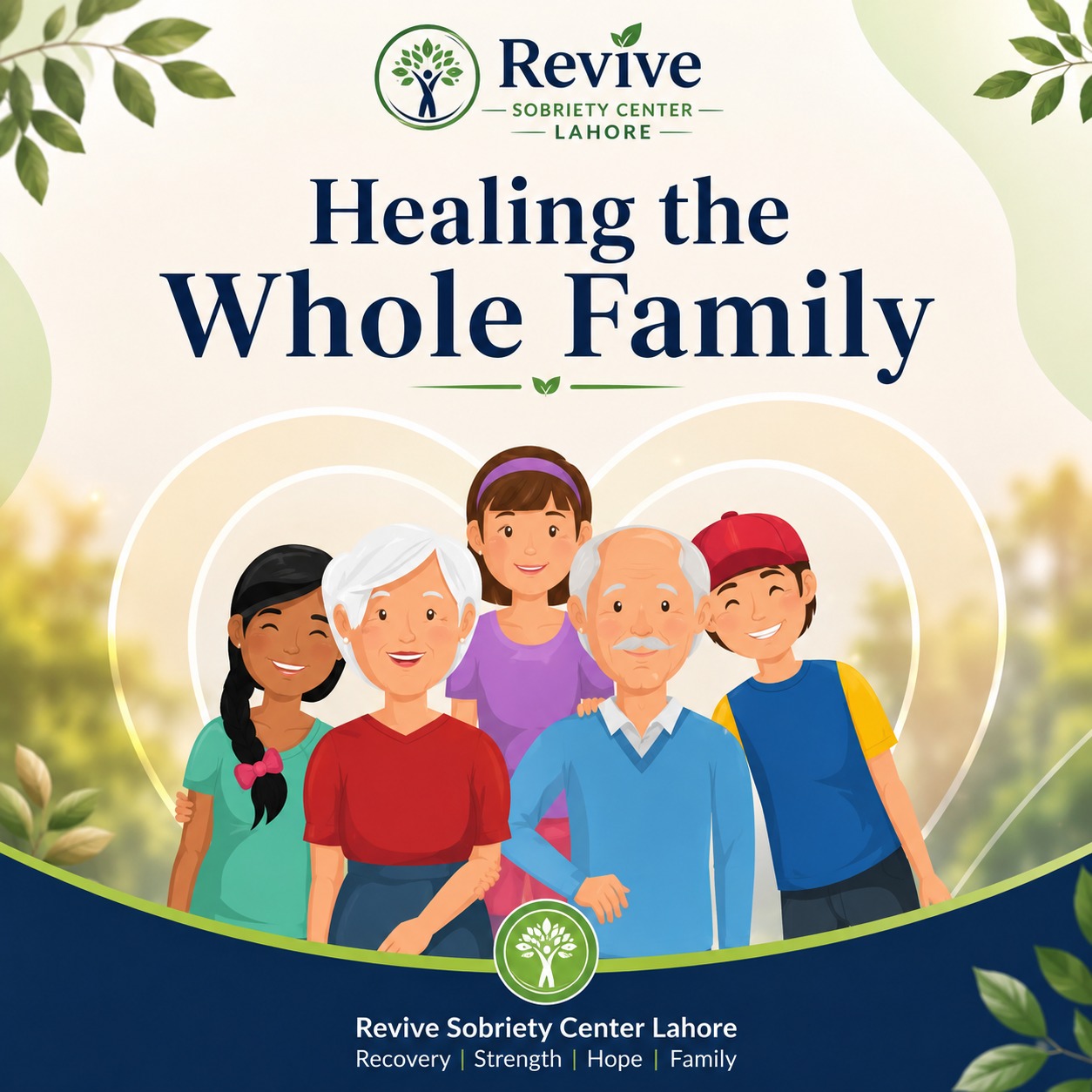
Recovery Is a Family Journey
Addiction may begin with one individual, but its effects are felt by everyone who loves them. The good news is that recovery can also become a shared journey of healing.
At Revive Sobriety Center in Johar Town Lahore, we believe that successful recovery involves supporting both the individual and their family. Through counseling, education, and compassionate care, families can rebuild relationships and move forward together.